How do enterprise leaders bridge the widening gap between buying artificial intelligence tools and generating actual financial returns? Many organizations deploy software but witness negligible shifts in core business productivity metrics.
A Top AI Corporate Trainer resolves this misalignment by anchoring technological capabilities into daily business workflows. True transformation requires structured, executive-led guidance rather than self-paced video tutorials.
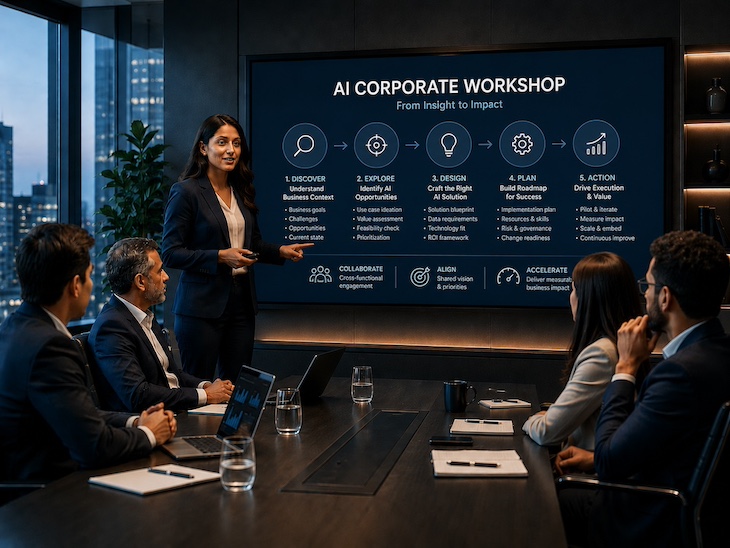
This blog analyzes how a top AI corporate trainer builds organizational fluency. It examines strategic upskilling frameworks that move workforces from basic experimentation to deep operational integration.
1. The Scaling Crisis in Enterprise AI Adoption
Organizations frequently invest millions in enterprise software licenses only to discover that adoption stalls at basic chat prompts. Employees often lack the contextual understanding required to embed these technologies into complex, multi-step business workflows. Consequently, expensive software sits underutilized, creating a visible deficit in projected return on investment.
This gridlock stems from a fundamental misunderstanding of how technical literacy spreads across an organization. Technology change management fails when workers view new tools as optional conveniences rather than core operational infrastructure. Without explicit direction, teams naturally default to familiar legacy habits and manual processes.
Recent research underscores the significant scale of this global corporate challenge. A study by the IBM Institute for Business Value reveals that executives estimate 40% of their workforce will need reskilling over the next three years due to AI implementation. This statistic highlights that the primary hurdle to modernization is human capability, not software engineering.
A professional AI corporate trainer addresses this structural friction directly. These specialists design role-specific curricula that map technical capabilities directly to clear business outcomes. They convert abstract algorithmic concepts into repeatable, practical workflows that average corporate business units can easily execute.
2. Selecting a Top AI Corporate Trainer for Your Enterprise
Not all educational consultants possess the background needed to guide an enterprise through complex operational changes. General technology instructors frequently focus too heavily on software features while ignoring broader business strategies. Selecting the right partner requires a strict evaluation of their executive experience and strategic industry insight.
A Top AI Corporate Trainer combines deep technical knowledge with an advanced understanding of corporate design and market dynamics. These experts do not simply teach people how to type prompts into user interfaces. Instead, they teach leaders how to restructure operating models to fully leverage computational speed.
When evaluating potential partners, look for instructors who provide customized corporate pilot programs. Avoid educators who rely on generic, one-size-fits-all lecture slides for every industry group. The ideal partner must understand your specific regulatory constraints, market pressures, and data security challenges.
Furthermore, elite trainers place a heavy emphasis on developing deep internal governance frameworks. They ensure that your workforce upskilling initiatives align perfectly with corporate legal guidelines and data privacy standards. This comprehensive approach protects your brand reputation while rapidly accelerating productivity across all business units.
3. Building Executive Fluency to Drive Long-Term Strategy
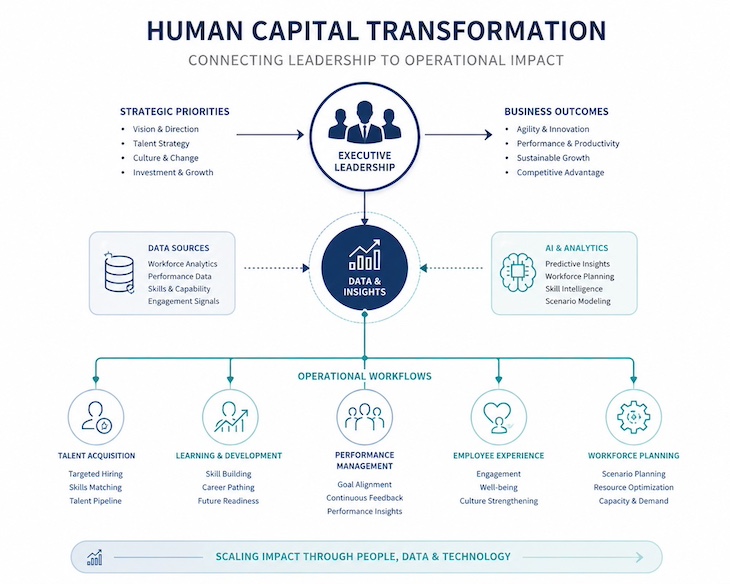
Workforce transformation initiatives regularly collapse when senior leadership remains disconnected from the underlying technology. When executives view advanced software as a minor tool for IT departments, strategic resource allocation suffers. True transformation must begin at the executive level to ensure long-term corporate alignment.
Executive fluency means understanding how automated systems shift market dynamics, margin structures, and competitive advantages. Leaders must learn to identify which business functions are ripe for automation and which require human oversight. This strategic clarity allows executive teams to redesign departmental budgets with absolute confidence.
When a top AI corporate trainer coaches an executive team, the curriculum shifts toward governance and value modeling. Leaders explore risk mitigation frameworks, ethical compliance guidelines, and long-term workforce architecture planning. This high-level training ensures the leadership team can champion change across the entire corporate hierarchy.
An educated executive board acts as a powerful catalyst for broad cultural adoption. When employees observe leadership actively using automated insights to drive business decisions, resistance decreases. Executive alignment transforms technological adoption from a mandate into a shared strategic mission.
4. Operationalizing Skills Across Global Business Units
Moving from executive alignment to global operational execution requires a highly disciplined, multi-tiered training methodology. Enterprises cannot expect broad cultural shifts to occur through simple, disconnected town hall presentations. Organizations must establish clear, structured pathways that help every department build relevant practical skills.
A professional training program translates abstract technological theories into specific, daily operational habits. For instance, marketing teams learn to automate segmented content production while retaining strict brand voice consistency. Legal departments discover how to accelerate contract analysis using secure, ring-fenced processing models.
To achieve this level of operational integration, enterprise leaders can utilize a structured implementation framework:
- Phase 1: Operational Audit: Identify specific operational bottlenecks and manual processes within each business unit.
- Phase 2: Targeted Curriculum Design: Develop custom training modules tailored to address those explicit inefficiencies.
- Phase 3: Super-User Incubation: Train internal champions within each team to provide continuous, peer-to-peer support.
- Phase 4: Coordinated Scaling: Roll out the verified training programs across the wider global organization.
This methodical approach ensures that technical training remains highly relevant to each employee’s daily responsibilities. By focusing on practical application, companies avoid learning fatigue and rapidly build measurable operational momentum.
5. Measuring the Financial Return of Corporate Training
Every corporate development program must ultimately justify its budget through clear, measurable financial performance. Executive boards should reject vague metrics like completion rates or subjective employee satisfaction scores. Instead, leaders must evaluate training success using hard operational data and productivity metrics.
A skilled AI corporate trainer establishes clear baseline metrics before any educational sessions begin. These benchmarks typically include tracking project delivery timelines, software utilization rates, and task error frequencies. Post-training performance is then measured against these baselines to isolate the true financial impact of the program.
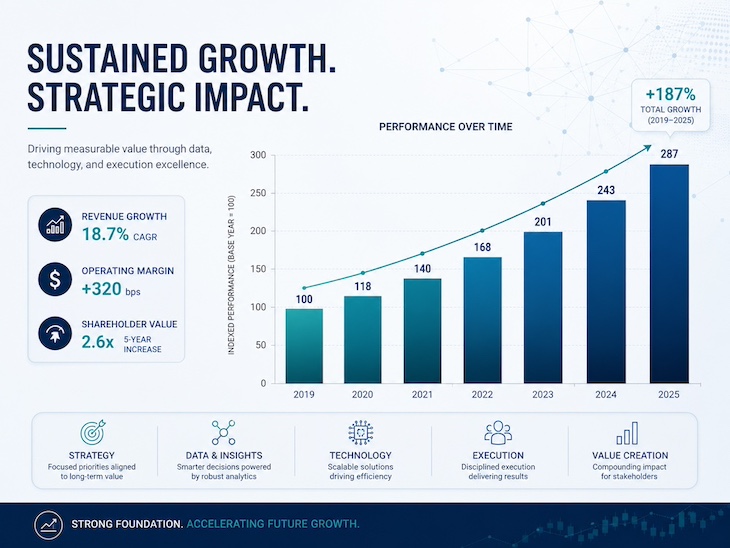
For example, a successfully upskilled customer operations team might reduce average support ticket resolution times by 35%. Meanwhile, a finance department could cut corporate variance analysis cycles from days to hours. These clear, time-saving improvements directly lower operational costs and improve overall profit margins.
Ultimately, professional training turns a volatile technology investment into a predictable corporate asset. By building deep internal fluency, you ensure your workforce can adapt as software continues to evolve. This agile capability forms the foundation of sustainable enterprise growth in an increasingly automated economy.
Conclusion: Securing Long-Term Enterprise Agility
Purchasing advanced software licenses is no longer a distinct competitive advantage for modern enterprises. Sustainable market differentiation depends entirely on how effectively your human workforce operationalizes those tools. Organizations that neglect structured training risk falling into expensive patterns of technological stagnation.
Partnering with an experienced instructor ensures your teams build deep, practical capability rather than surface-level literacy. This strategic investment protects your technology budget, optimizes workflows, and establishes robust compliance controls. True organizational agility is achieved when human ingenuity and automated systems operate in perfect alignment.
Is your organization struggling to translate technology investments into clear, measurable operational efficiency? Suboptimal adoption rates often indicate a missing structural link between software features and daily corporate workflows.
We provide objective strategic guidance, corporate governance blueprints, and customized workforce upskilling frameworks for global enterprises. Contact our advisory team today to design a scalable AI transformation framework that aligns perfectly with your long-term business objectives.
Frequently Asked Questions
- How long does a typical enterprise AI training program take?
Comprehensive enterprise programs usually span eight to twelve weeks. This timeframe includes an initial operational audit, custom curriculum development, executive alignment sessions, and department-specific training rollouts. - Why is executive-led fluency critical for technology adoption?
Executive training ensures that senior leaders understand compliance risks, resource allocation needs, and strategic shifts. When executives lead adoption, it creates organizational alignment and reduces cultural resistance across departments. - How do you measure the financial return of an AI corporate trainer?
Financial return is measured by tracking operational KPIs before and after training. Key indicators include reductions in task cycle times, decreased reliance on external agencies, and higher software utilization rates. - Can training programs accommodate highly regulated industries?
Yes. A professional trainer builds custom modules that strictly incorporate industry-specific regulations, such as HIPAA, GDPR, or financial compliance guidelines, ensuring safe and secure data practices. - What is the difference between an AI corporate trainer and an IT consultant?
An IT consultant focuses on software installation, technical architecture, and system integration. An AI corporate trainer focuses on human adoption, change management, behavioral shifts, and practical workflow optimization.
Quick Summary
What does a top AI corporate trainer do for an enterprise? A top AI corporate trainer designs and executes targeted, role-specific learning programs that help enterprise workforces safely adopt artificial intelligence. They bridge the gap between technical software features and practical corporate strategy, ensuring visible operational efficiency. Core responsibilities of an elite enterprise technology trainer include: Auditing existing operational workflows to pinpoint automation opportunities. Developing custom, role-specific prompt engineering and tool utilization workflows. Training executive leadership teams on risk mitigation, data privacy, and governance. Establishing clear internal key performance indicators to measure technology adoption rates. Building sustainable peer-to-peer support networks within global business units.
Pingback: Generative AI Corporate Training: What Should Employees Learn?